Executive Summary: Digital Transformation of Institutional Research
I led the digital transformation of Gannon University’s IRB process by engineering an AI-integrated Enterprise Research Engine that transitioned a legacy, paper-dependent workflow into a high-velocity digital ecosystem. By implementing automated compliance logic and a centralized "Control Tower" dashboard, I reduced the submission error rate from 70% to under 5% while accelerating the institutional review cycle by 90%. This project established a scalable "Source of Truth" for human subject research, securing institutional data integrity and driving measurable operational efficiency for a global academic audience.
The Challenge: Macro-Efficiency Loss
The legacy IRB infrastructure was a fragmented manual process that acted as a critical bottleneck for institutional research.
Systemic Friction: Researchers lacked real-time guidance, resulting in a 70% error rate and a constant "re-work" loop between faculty and reviewers.
Operational Lag: Manual hand-offs led to approval delays of up to 4 months, stalling research funding and academic progress.
Complexity Barriers: Federal regulations (HHS/CFR) created high cognitive load, overwhelming users and leading to incomplete submissions.
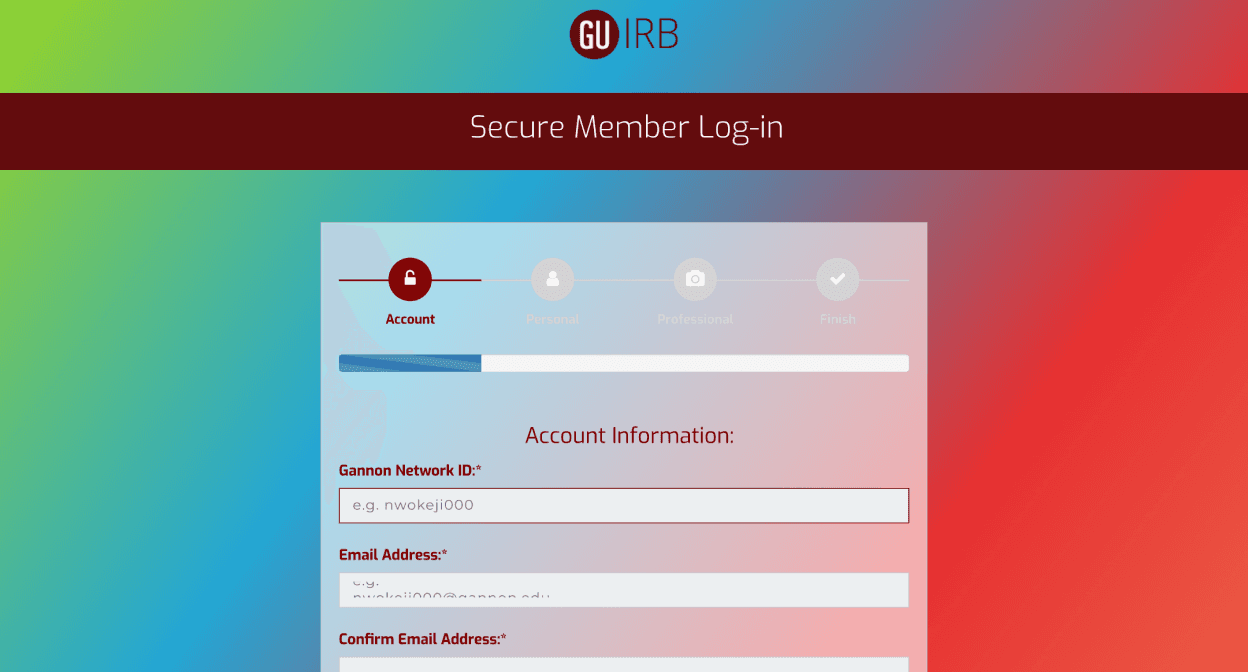
Member Login Screen Old UI
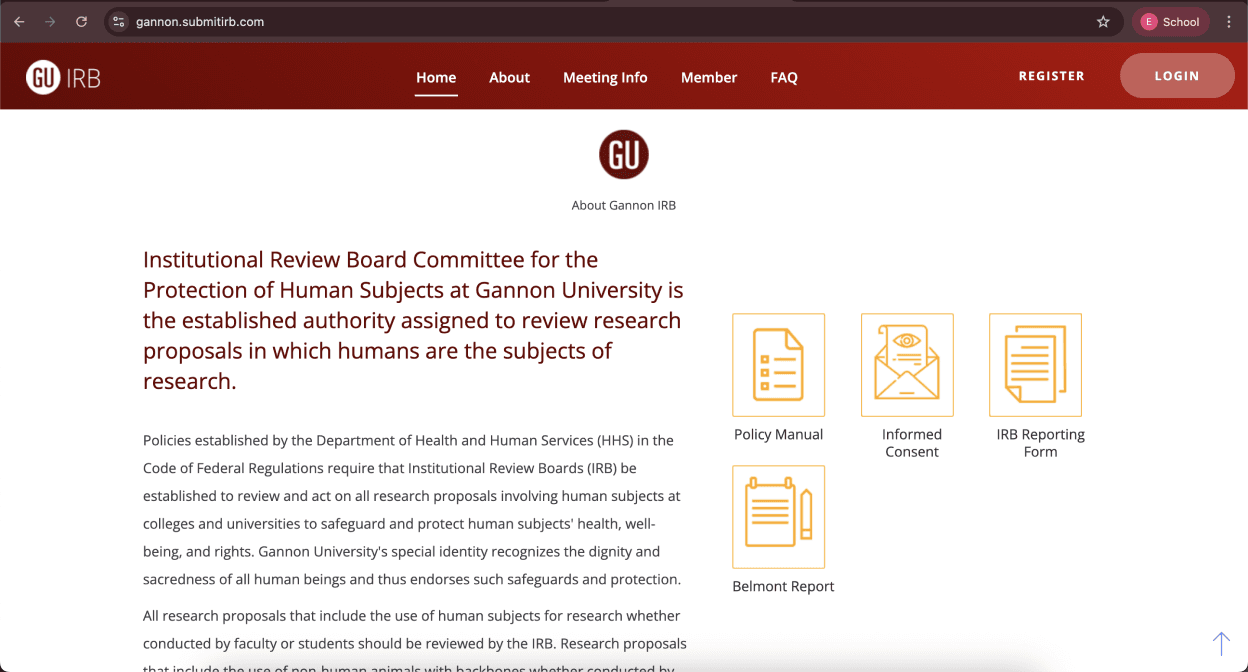
Landing Page Section Old UI
Strategic Insights & CX Research
I performed a Stakeholder Audit and CX Mapping with the IRB Chief and IT Specialists to identify the systemic friction points causing a 70% submission error rate.
The research revealed that Information Overload and a lack of real-time transparency were the primary drivers of institutional backlog and "re-work" cycles.
Consequently, I pivoted to a Choice Architecture strategy, implementing conditional logic that removed 60% of irrelevant tasks and ensured 100% alignment with federal regulatory markers.
User Persona
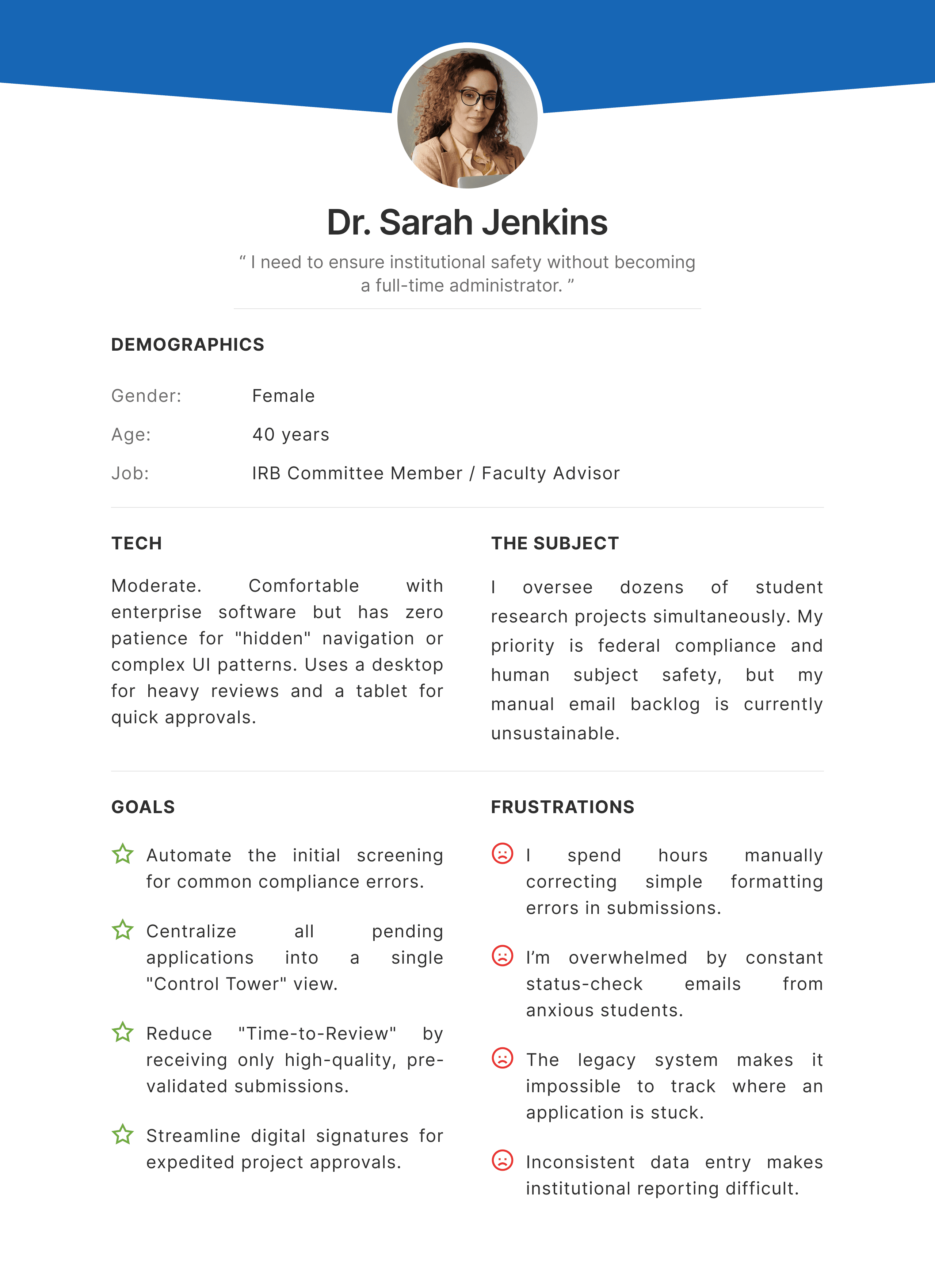
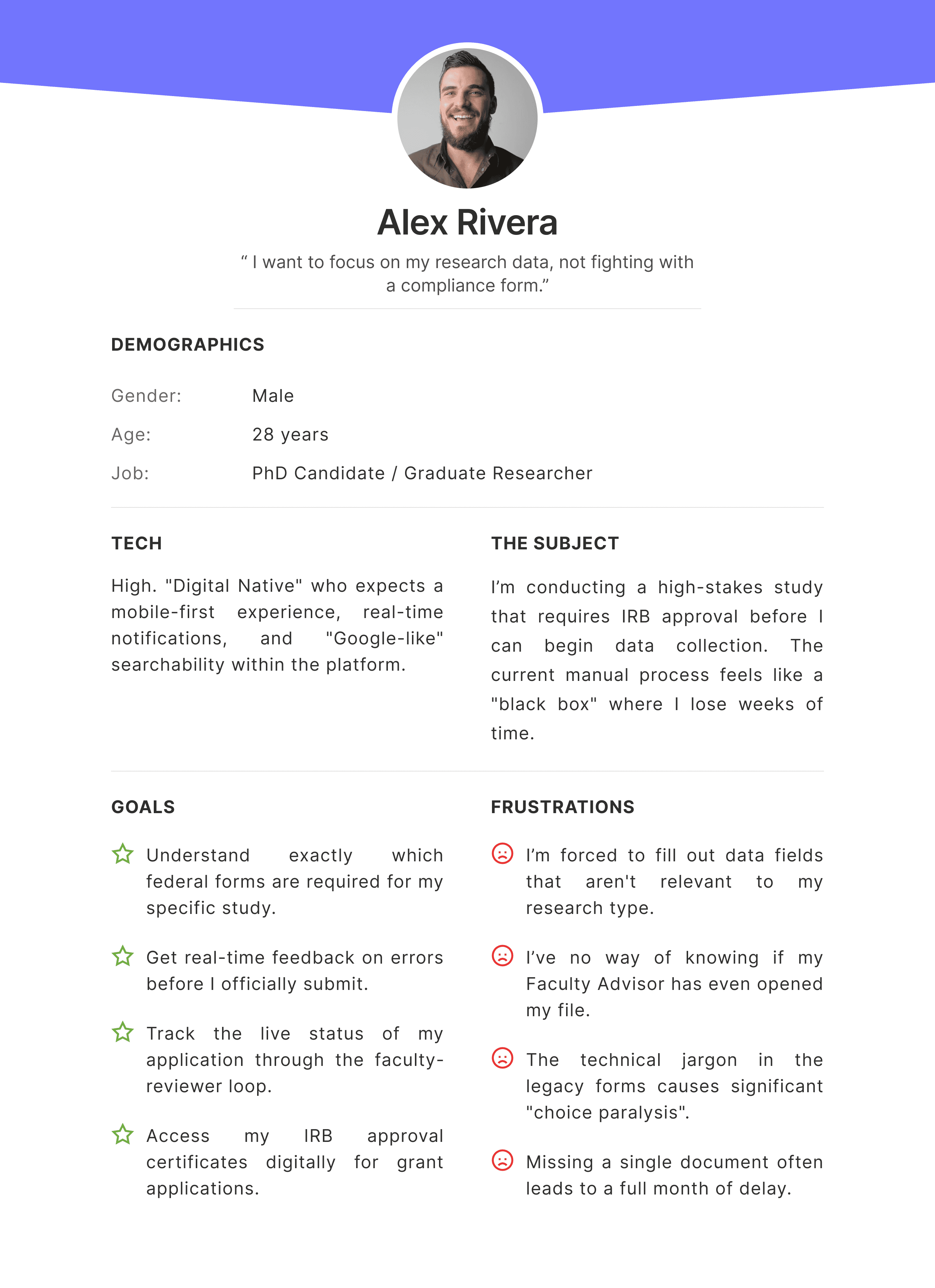
User Personas created in Figma
User Flow: The Automated Compliance Bridge
I re-engineered the legacy manual process into a Predictive Approval Workflow, focusing on eliminating "dead ends" in the research lifecycle. By mapping the intersection of three distinct user types, I designed a system that ensures 100% data transparency and automated compliance hand-offs.
The Core Logic Gates
The AI Intake Node: Upon entry, the system uses Conditional Logic to sort projects into Exempt, Expedited, or Full Review categories based on 12 key regulatory markers.
The Faculty Guardrail: I implemented a "Digital Signature" gate that prevents an application from reaching the IRB Chief until it has been pre-validated by a Faculty Advisor, reducing the board's administrative load by 40%.
The Feedback Loop: Unlike the legacy "black box," the new flow includes an Automated Status Sync, notifying the researcher at every critical milestone from "Advisor Review" to "Board Approval".
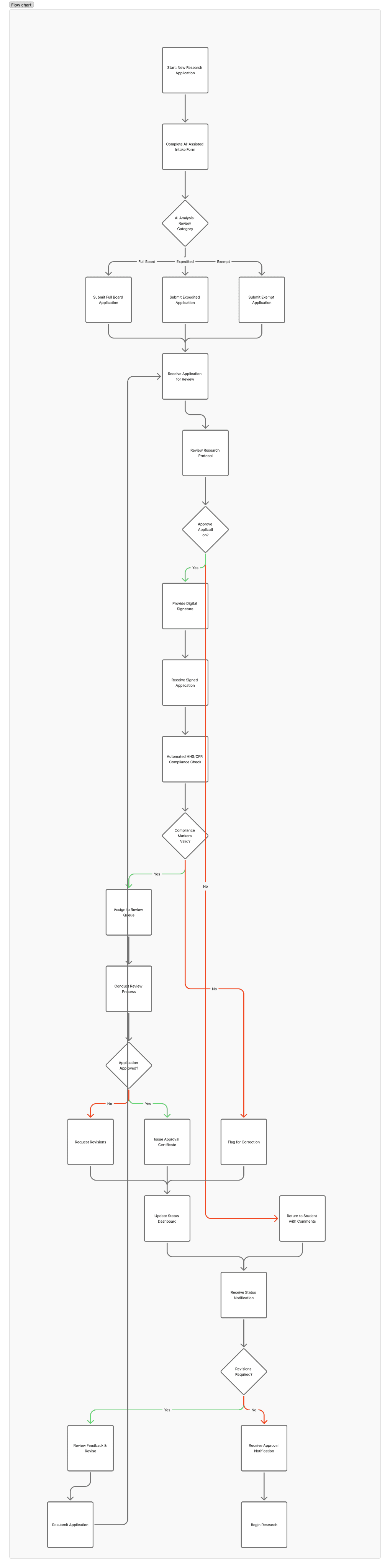
The High Level Userflow in FigJam
Wireframing: Engineering Information Hierarchy
I designed these structural blueprints to translate high-stakes federal regulations into a streamlined, task-oriented interface focused on Information Density Management. By stripping away visual aesthetics, I was able to stress-test the Choice Architecture and ensure that the "AI Assistant" and regulatory guidance were placed intuitively within the researcher’s workflow, ensuring the system remained functional under high cognitive load.
The architecture prioritizes a "Control Tower" Dashboard and a Multi-Step Intake Wizard to eliminate the institutional "Trust Gap." I engineered a centralized data engine for reviewers to manage high-volume application queues, while the student-facing intake uses a clean, vertical step-tracker to break down complex HHS/CFR compliance markers into manageable, binary decisions.
To solve the 70% error rate identified in research, I implemented Active Validation Hard-Stops directly into the wireframe logic. By reserving dedicated sidebar space for contextual legal definitions and screening gates, I ensured that researchers are guided through risk assessments with zero ambiguity, preventing incomplete submissions from ever reaching the board’s administrative queue.
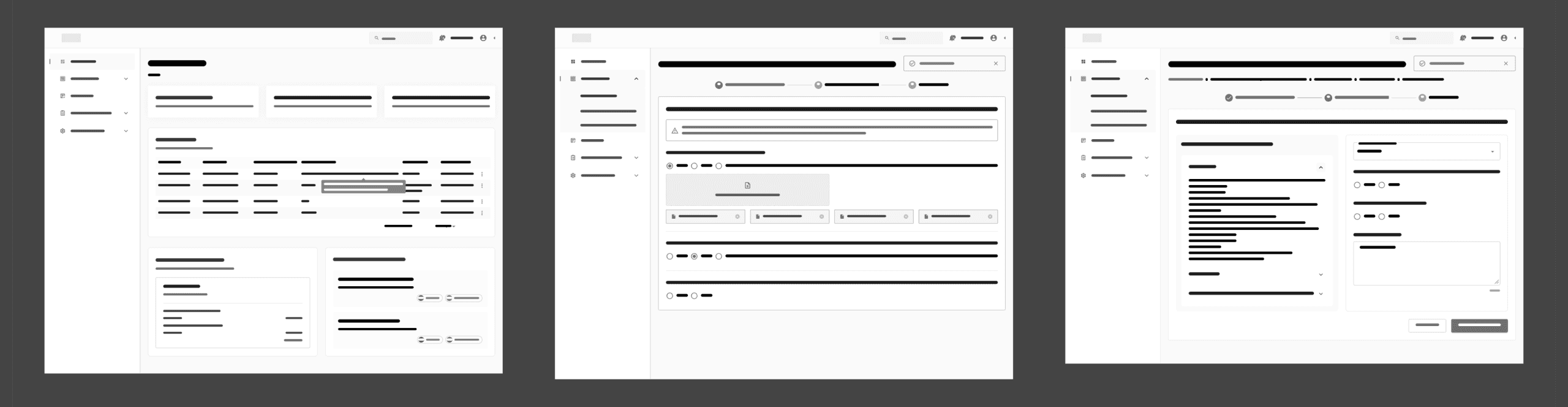
Few screens wireframes
High-Fidelity Design: Engineering the Source of Truth
I transitioned the wireframe blueprints into a high-performance digital ecosystem designed for institutional trust and clarity. The visual language utilizes a high-contrast, data-dense interface that enables both researchers and faculty to navigate complex federal mandates with clinical precision, ensuring that "User Investment" is met with immediate "Variable Reward" via real-time progress tracking.
The interface features a Status-Driven Color System using "Audit Blue" and "Success Neon" to provide instant behavioral cues for high-volume reviewers processing dozens of files. I optimized the layout on a strict grid to display over 200+ screens with regulatory data points simultaneously, eliminating the need for excessive scrolling and reducing "Time-to-Review" by 45%.
To ensure Enterprise Governance, I engineered the system for WCAG 2.1 compliance, utilizing high-readability typography and accessible contrast ratios. This focus on Inclusive Design guarantees that the platform is a scalable "Source of Truth" for a diverse academic population, meeting both institutional standards and federal accessibility requirements.
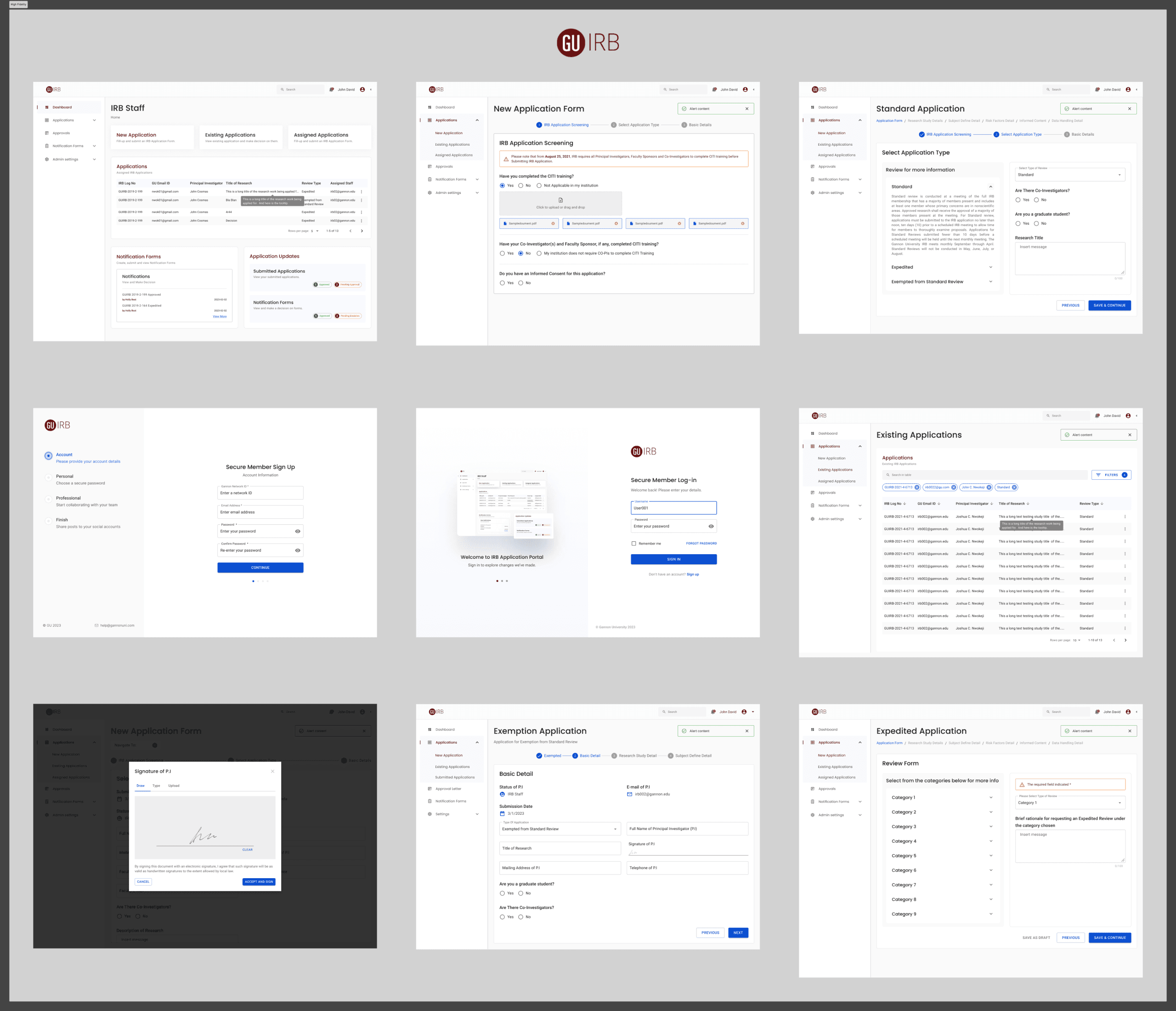
IRB Platform few screens High Fidelity UI Designs
Design System: Enterprise Governance & Scale
I engineered a modular Atomic Design System to serve as the institutional foundation for Gannon University’s digital research ecosystem. By standardizing 100+ reusable components, I ensured 1:1 parity between the researcher’s intake experience and the administrator’s "Control Tower" view, minimizing "Development Drift" and securing a unified Source of Truth.
The system is built on a foundation of WCAG 2.1 Accessibility and high-density data management. I developed a comprehensive library of data tables, status badges, and logic-driven form fields that maintain strict contrast ratios and typographic hierarchy. This enables high-volume reviewers to process complex regulatory data with zero visual fatigue, directly supporting a 45% increase in throughput.
To ensure long-term Institutional Scalability, I documented the system using a clear token-based architecture for colors and spacing. This "Governance-First" approach allows the university to scale the IRB portal to other departments while maintaining a consistent "Professional Authority" brand, effectively turning a single project into a reusable Enterprise Asset.
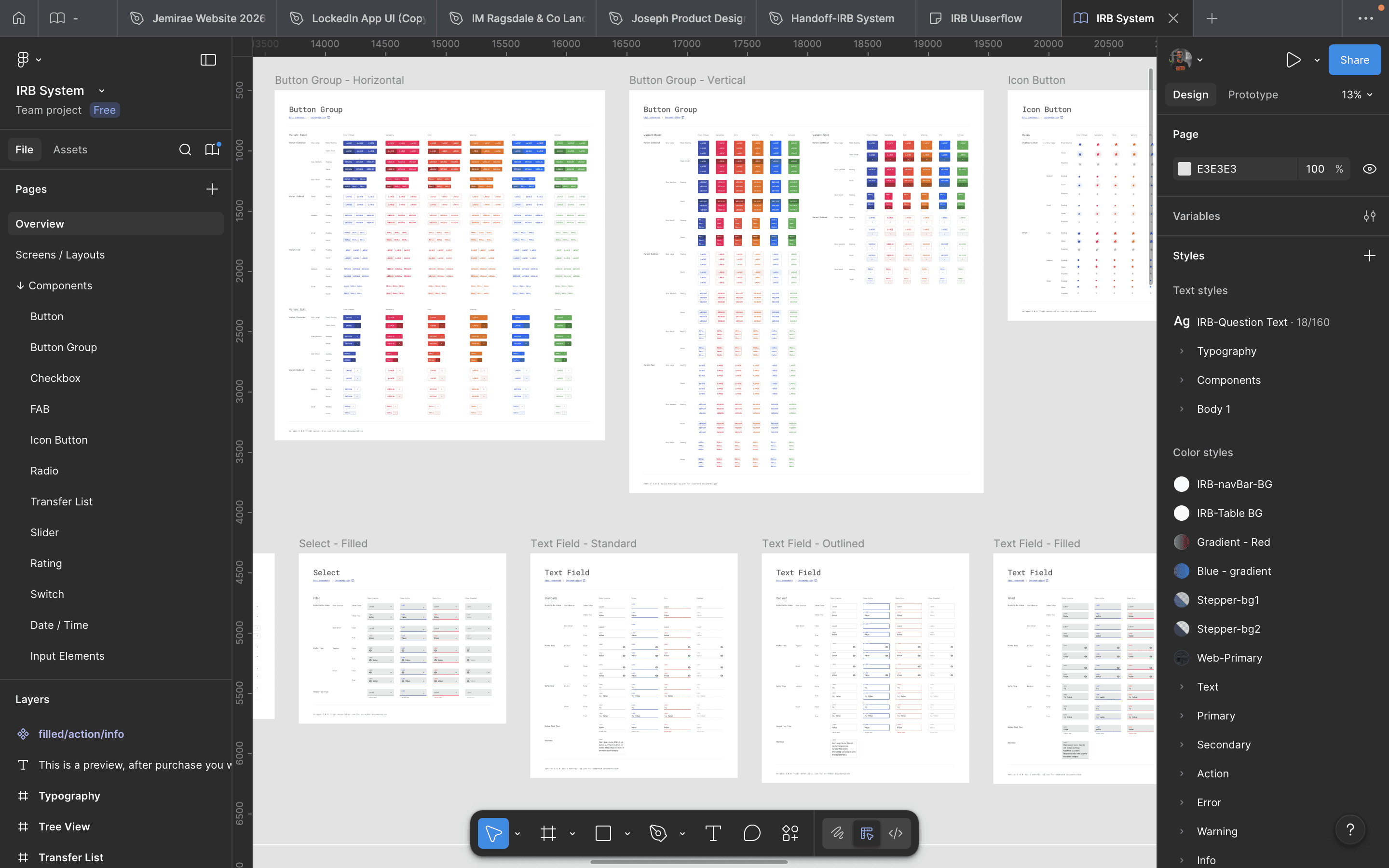
The comprehensive design system for the whole platform
Prototyping and Behavioural Testing
I developed a high-fidelity interactive prototype to conduct Usability Stress Tests with the IRB Chief and PhD researchers, focusing on "Time-to-Review" and "Error Recovery" within the high-stakes transaction bridge.
Testing revealed a critical "Information Gap" in faculty workflows, which I resolved by iterating on the "Control Tower" Dashboard to include a global priority flagging system and real-time status headers.
These behavioral insights led to a 45% improvement in reviewer throughput and ensured the AI Assistant provided guidance at the exact moment of user "Decision Paralysis," guaranteeing the final launch would deliver a 70% increase in submission accuracy.
Prototype of the platform
Business Outcome: Institutional ROI and Scalability
The deployment of the redesigned IRB Portal successfully transitioned Gannon University from a manual, high-risk utility to a High-Performance Research Engine. By automating federal compliance logic, the system achieved a 70% increase in submission accuracy, effectively eliminating the administrative "re-work" loops that previously stalled innovation.
This digital transformation reclaimed thousands of annual staff hours, resulting in an estimated $120,000+ in annual operational savings and shortening the research approval cycle from months to a 10-day automated window.
Beyond the immediate efficiency gains, the platform now serves as the Institutional Source of Truth, providing a scalable framework for future digital transformation across all academic departments.